
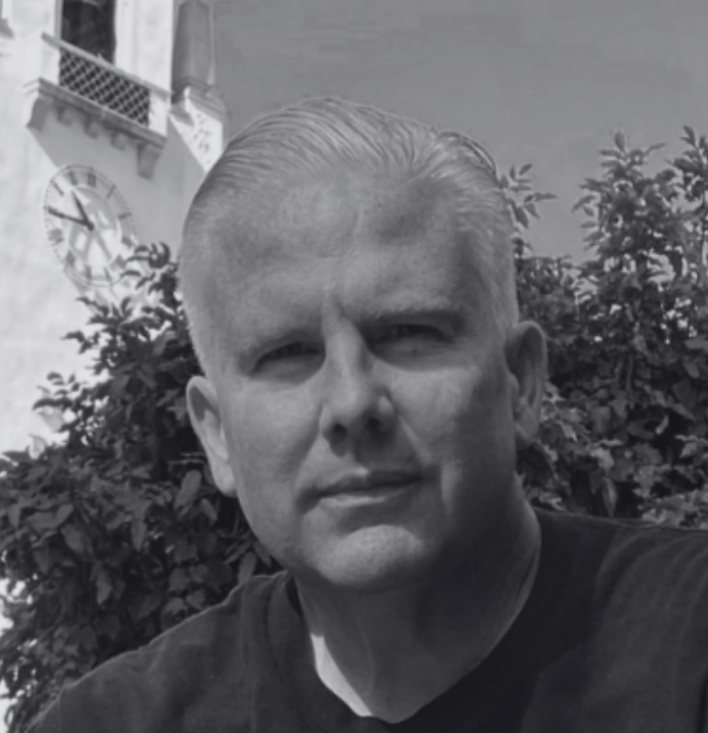
Turning Defeat Into Triumph – An Interview with Matthew Hutcheson
https://www.brainzmagazine.com/post/turning-defeat-into-triumph-an-interview-with-matthew-hutcheson
Matthew Hutcheson is a former advisor to two White Houses and both Houses of Congress, as well as a Supreme Court amicus. He has testified before Congress six times, including appearances before the Committees on Health, Education, Labor, and Pensions (H.E.L.P.), Aging, Finance, and Ways and Means. Matthew’s academic work is published by the University of Illinois Law School at Urbana-Champaign and the Social Science Research Network. He is an occasional university lecturer, is the author of 13 books, including the recently released and highly acclaimed “Rapport: The Science of Human Connection,” and the creator of the “E.P.I.C. Defeat the Defeat™” leadership training program. A former Pentagon official called a particular speech given by Hutcheson “one of the best motivational speeches ever.” Matthew has been married to Annette for 33 years and is the proud father of four successful adult children and a grandfather of three.

Matthew Hutcheson, E.P.I.C.™ Philosophy
Who is Matthew Hutcheson?
No single label fits me. At base, I help people not give up when everything seems lost. My method is the mind, linking the philosophy, neurology, and psychology of leadership, and translating that into simple, repeatable practices. After ten years in prison, including 36 non-consecutive months in solitary, I know the terrain of severe crisis; more importantly, I learned how to endure, repair, and rebuild. Through E.P.I.C.™, I teach that hard-won knowledge so others can turn setbacks into triumphs.
My Myers-Briggs type is INFJ-A, and my blood type is AB-negative. I’ve survived two different cancers. Beginning in 2004, I advised elected officials in Washington, D.C., including two U.S. presidents, on socio-economic matters. From 2007 to 2011, I testified before Congress six times, filed an amicus brief with the U.S. Supreme Court in 2009, and was published in a prominent U.S. law journal. More recently, a physician reviewing an X-ray concluded I likely broke my neck playing college rugby 36 years earlier, non-emergent, but with enduring bone fragments in my cervical spine that tell the story. I’m living a never-ending stream of once-in-a-lifetime experiences.
I’m a lifelong student of how trust actually works in real life, at the kitchen table and in the boardroom. At home you’ll find me reading theology and history, hiking, or sketching leadership and trust models on a yellow legal pad. In business, my wife, Annette, and I created the E.P.I.C.™ framework and the E.P.I.C. Trustworthiness Index (ETI), which convert immutable principles into measurable actions leaders can practice. An interesting fact: I design “organizational haiku”, short, disciplined rules (like Trust = (L1 × L2 × V)^i) that make a safe organizational culture executable.
I’m married to Annette, a father of four grown children, and a grandfather of three (with one on the way as of 2025). For leisure I write books, philosophy, and poetry. I relentlessly pursue learning in neuroscience, psychology, leadership, natural medicine (especially migraine abatement), astrophysics, and public life. I love fly fishing, vulnerable and meaningful conversations, and being near streams, rivers, lakes, and oceans, and the life within them.
How did your experience advising the U.S. Senate and Supreme Court shape your approach to leadership?
Operating under public scrutiny taught me two things: first, precision of word, say only what you mean, what you can keep, and what you can actually do; second, discipline of process, document, disclose, and repair early. When stakes are high, vague values won’t do; leaders need a repeatable calculus. That’s why my work codifies trust behaviors into clear laws (L1, L2) and vulnerability (V) that withstand pressure. I should tell this story… One senator told me, “Matt, don’t ever surprise me with news. There is no such thing as good news or bad news. There’s just news. So, make sure I hear it from you before I hear it from anyone else. I’ll decide whether it is good or bad news after I’ve had time to evaluate it for meaning.”
Unexpectedly, my approach to leadership was significantly shaped by the realization that officials in government, all three branches, struggle with leadership themselves. Within the U.S. Supreme Court there are staff who refuse to constructively participate in the process. There are members of Congress whose personal lives are in a state of unending chaos and disorder. Elected officials have family problems, IRS problems, colleague problems, confusion, illness, and duplicity of belief. If there was one core takeaway from my time working in Washington, D.C., it is this: People of all statures and statuses are fragile and need help. In quiet moments when they feel safe, they will ask for it. I’ve given advice, some of which was received and implemented, to some of the most powerful people on earth.
What does “E.P.I.C. Defeat the Defeat™” mean, and how can it transform organizations?
It’s a compact playbook for turning setbacks into compound gains.
- E – Ethos: re-anchor character and promises; bend your arc back to true north each day or even more frequently, if necessary.
- P – Perspective: name reality without spin. When you are too close to a problem, zoom out until you can see things from a higher perspective.
- I – Influence: model publicly what you want multiplied. Influence is reputation multiplied by credibility.
- C – Carry-On: install small, repeatable habits. Dismiss F.U.D.D. (fear, uncertainty, doubt, and dread).
Do not permit yourself to get discouraged. Swim the same stroke every minute of the day. This is how defeat is defeated. Organizations change not by slogans, but by rhythms; Defeat the Defeat™ installs those rhythms so teams recover faster and stronger. My affirmation: ‘Defeat anything, triumph over everything, be limited by nothing, and emerge as an unstoppable force.’ This is what E.P.I.C. can do for an organization and its leaders.
Can you share a pivotal moment when your leadership training made a significant impact?
One time in the heat of a situation I “shushed” a colleague. Immediately I knew I had erred. This ‘shush’ was not contained between him and me, it was in front of about 40 impressionable associates. It was a monumental mistake on my part. Not only did I understand my mistake, but I also felt sincere remorse for my hurtful words. My ethos demanded that I repair the damage I had caused. This required all of the leadership skill I had, and all of the courage I had as well, because my apology would not only be to my colleague, but also to all 40 associates. The following day I gave an apology to my colleague and associates who were all together. Precise, clear, and unqualified apologies are the lifeblood of relationship repair. As such, they are also the lifeblood of leadership.
Another experience involved a mid-market company wrestling with deeply entrenched cultural distrust. We used our ETI to diagnose patterns: intensity of emotions, missed commitments (L1), boundary encroachments (L2), and a fear of disclosure (V). We measured who possessed benevolent influence within the organization so as to know who we could call upon to assist in the trust repair. From there, we implemented a three-week cadence, promise audit, honor moments, and clean apologies with amends. Within a quarter: schedule slippage reduced, voluntary turnover stabilized, and customer renewals ticked up. Trust moved from abstraction to dashboard—and then to outcomes. There are other instances where Annette and I provided several full-day training sessions to executives and upper-level management to help them gain an entirely different understanding of leadership and trust.
What unique insights can clients expect from working with you that they won’t find elsewhere?
Three things: (1) A measurable trust model, ETI translates values into a 0-100 score. (2) A fully deployable method for overcoming any trauma, tragedy, adversity, or tribulation (Defeat the Defeat™) coupled with proprietary modalities that actually repair trust. (3) Organizational haiku, short rules leaders can teach in a minute and practice all week. It’s tradition-honoring and forward-leaning: virtue with instrumentation.
Why should leaders and organizations choose you as their trusted advisor in navigating complex challenges?
In prison, trust, influence, apologies, and leadership can mean the difference between life and death. Believe it or not, there is a very rigid system and structure of leadership in prison. There are rules, lots of them, that if violated result in swift and forceful correction. From my prison experience, and my formal training, I built a framework that honors how things have always built trust, kept word, honored dignity, honest repair, while making it measurable and teachable for modern teams. I don’t sell slogans; I install systems. If you want trust to become your organization’s quiet competitive advantage, I’ll help you build it, track it, and protect it. One of my university professors said this about my method: “We could take Matthew Hutcheson and drop him into any leadership-crisis situation anywhere on earth and he would turn it around, restore order, profitability, and trust.” This is why organizations should choose me.
Follow me on Facebook, Instagram, LinkedIn, and visit my website for more info!
Read more from Matthew Hutcheson